
Al-Andalus: A Civilization of Knowledge and Beauty
From 711 to the fall of Granada
How it began
In 711 a force led by Tariq ibn Ziyad crossed from North Africa into the Iberian Peninsula. Within a few years most of the peninsula was under Muslim rule, and the region became known in Arabic as al-Andalus.
In 756, Abd al-Rahman I — a surviving Umayyad prince who escaped the fall of his family in Damascus — established an independent emirate in Córdoba. In 929 Abd al-Rahman III declared it a caliphate.
Córdoba, a centre of knowledge
Tenth-century Córdoba had paved and lit streets, public baths, running water and one of the largest book collections in the world. The caliphal library of al-Hakam II is described in sources as holding a vast number of volumes, and Córdoba's copyists, binders and booksellers formed an entire industry.
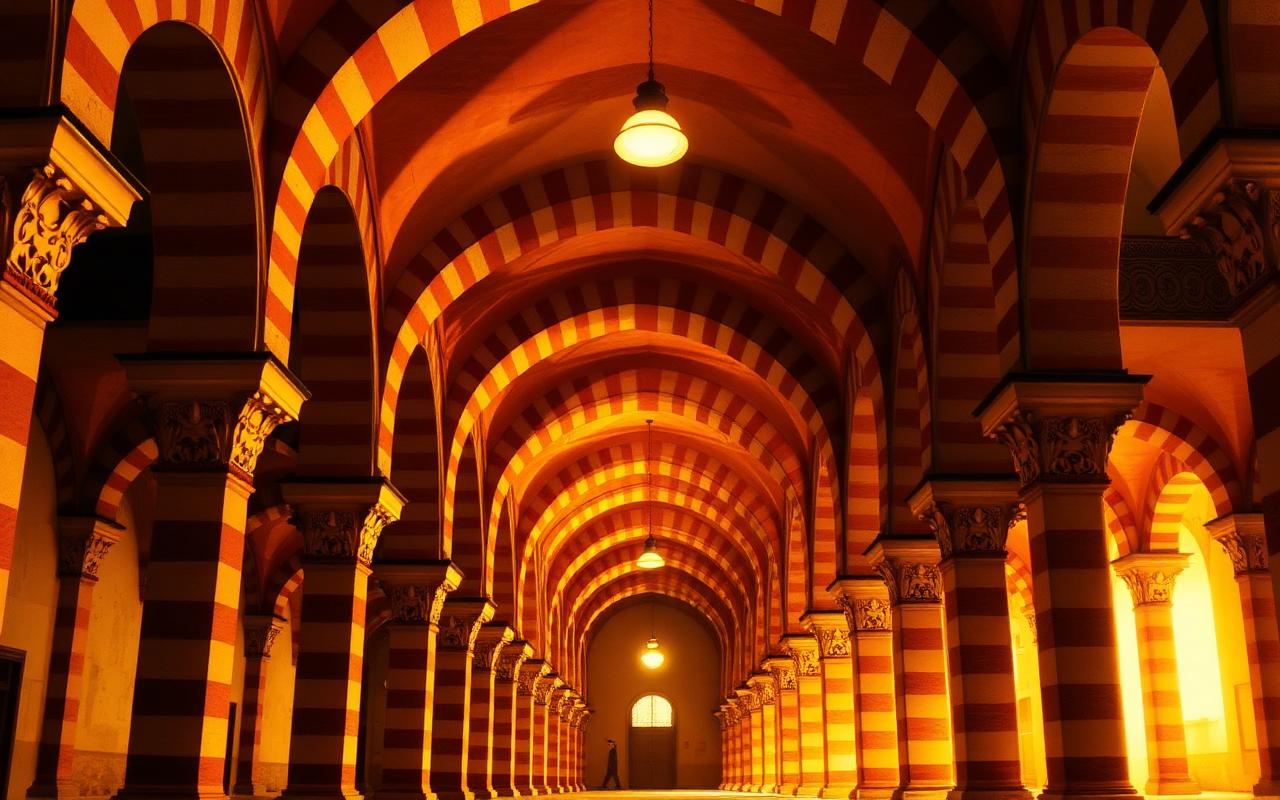
The Great Mosque of Córdoba, begun in 785 and expanded over two centuries, remains one of the most influential buildings in architectural history for its forest of double horseshoe arches.
Nearby, the palace-city of Madinat al-Zahra (begun 936) housed the administration in marble halls; it was destroyed in civil war within about 75 years and lay buried until modern excavation.
Science, medicine and thought
Al-Zahrawi (d. c. 1013) of Córdoba wrote al-Tasrif, a thirty-volume medical encyclopaedia whose surgical section — with illustrations of instruments he designed — was translated into Latin and used in European medicine for centuries.
Ibn Rushd (Averroes, 1126–1198) wrote commentaries on Aristotle that shaped later European philosophy, alongside works of Maliki law and medicine. Ibn Zuhr advanced clinical practice; al-Zarqali built refined astronomical instruments; agronomists wrote detailed farming manuals and irrigation systems transformed the land.
Granada and the Alhambra
After the caliphate fractured, the Nasrid kingdom of Granada (1232–1492) became the last Muslim state in Iberia. Its rulers built the Alhambra, a palace complex of courtyards, water channels and carved plaster where Qur'anic verses and Arabic poetry are written into the walls themselves.
1492 and after
In January 1492 Granada surrendered to Castile and Aragon. The surrender terms promised religious freedom, but within a decade those terms were withdrawn; forced conversion followed, and in 1609 the Moriscos — descendants of Muslims — were expelled.
What remained was still immense: buildings, irrigation systems, agricultural crops, thousands of Arabic-derived Spanish words, translated scientific texts, and a memory that still draws millions of visitors to Córdoba and Granada each year.
Al-Andalus was not a utopia. It saw wars, political intrigue and periods of intolerance. But at its best it showed what a confident, learning-centred Muslim society could build.
Key dates
- 711
Muslim forces cross into Iberia; al-Andalus begins.
- 756
Abd al-Rahman I founds the Umayyad emirate of Córdoba.
- 785
Construction of the Great Mosque of Córdoba begins.
- 929
Abd al-Rahman III declares the Caliphate of Córdoba.
- 936
Madinat al-Zahra is begun.
- c. 1000
Al-Zahrawi completes al-Tasrif, a landmark medical encyclopaedia.
- 1031
The caliphate collapses into the Taifa kingdoms.
- 1085
Toledo falls to Castile; its translation activity later reshapes Europe.
- 1232
The Nasrid kingdom of Granada is established.
- 1238–1358
The Alhambra is built and expanded.
- 1492
Granada surrenders; Muslim rule in Iberia ends.
- 1609
The Moriscos are expelled from Spain.
People in this story
Why it matters today
Al-Andalus is proof that Muslim societies have built world-class science, art and city life — and that losing that position was a historical process, not a permanent condition.
- Knowledge and beauty are part of Islamic civilization, not extras.
- Internal division cost al-Andalus more than any external army.
- Civilizations leave traces even after they fall — build things that last.
Reflect: If a future generation studied your community, what would they find that was worth keeping?
How much did you discover?
0 / 3 correct
1. Who wrote al-Tasrif, the great surgical encyclopaedia of Córdoba?
2. In which year did Granada surrender, ending Muslim rule in Iberia?
3. Madinat al-Zahra was:
Sources & further reading
Where historians disagree, we say so. Established facts, scholarly interpretation and traditional accounts are kept distinct — please read the sources for depth.
- Hugh Kennedy, Muslim Spain and Portugal: A Political History of al-Andalus (Longman)
- Robert Hillenbrand, Islamic Architecture: Form, Function and Meaning (Edinburgh University Press)
- Maribel Fierro (ed.), The Western Islamic World, Eleventh to Eighteenth Centuries — New Cambridge History of Islam, Vol. 2
- Emilio González Ferrín and Antonio Vallejo Triano on Madinat al-Zahra excavations (UNESCO World Heritage documentation)